

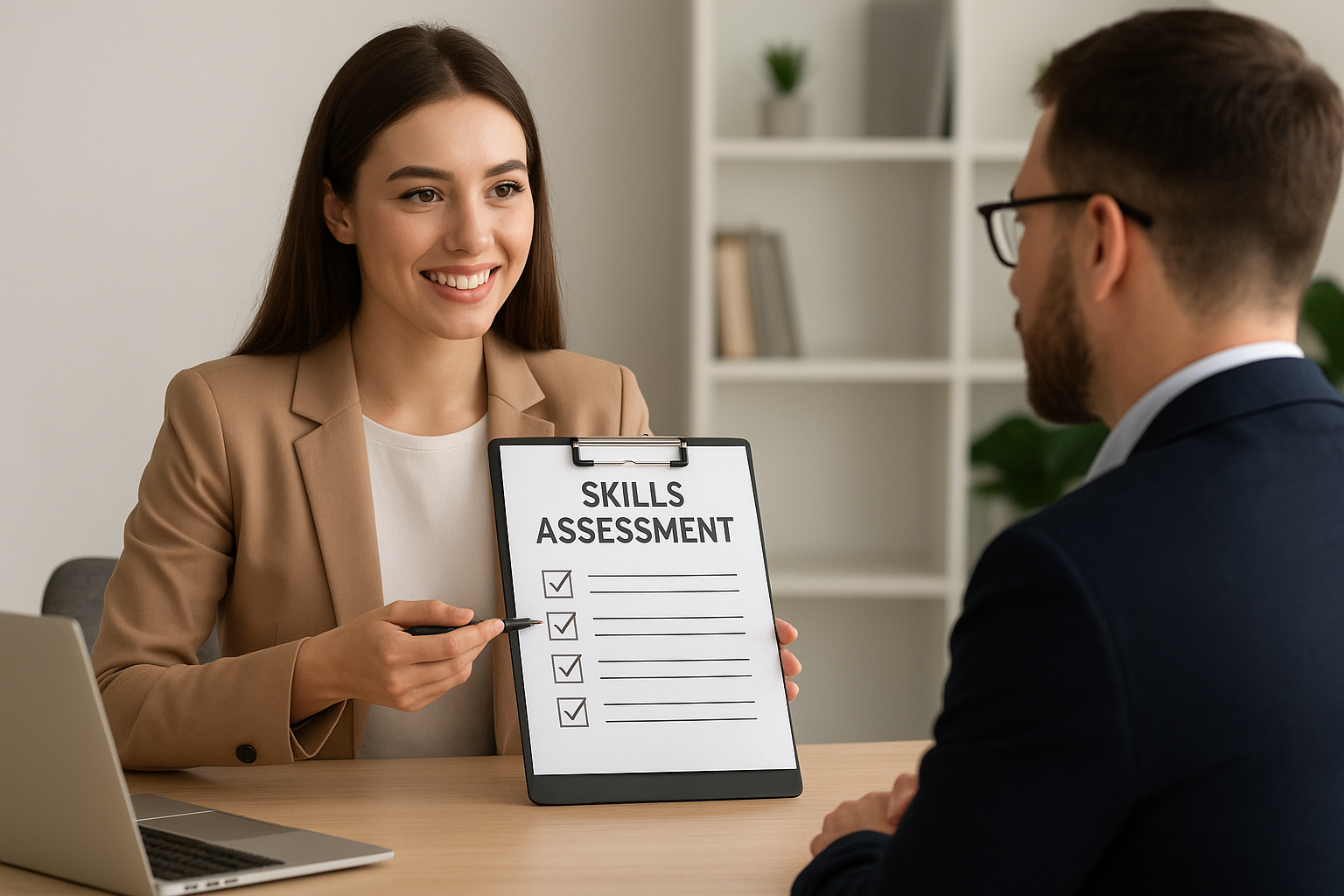
Understanding Skills Assessments
Skills assessments have become a fundamental component of the hiring process, serving to evaluate candidates beyond what traditional job interviews offer. Unlike conventional interviews, which often rely on hypothetical questions and personal anecdotes, skills assessments are structured to measure practical abilities in a more objective manner. This method provides a direct insight into a candidate’s relevant competencies, allowing employers to make informed decisions based on actual performance.
The primary objectives of skills assessments are to evaluate specific job-related knowledge, assess problem-solving capabilities, and gauge practical skills that are essential for the role. By incorporating these evaluations into the hiring process, employers can identify candidates who not only possess the theoretical knowledge but also the ability to apply that knowledge effectively in real-world scenarios. This is particularly important given the competitive nature of today’s job market, where candidates must demonstrate proficiency in various technical and soft skills pertinent to their desired positions.
Skills assessments can take various formats, including online tests, practical exercises, and situational judgment tests. Online tests typically cover theoretical aspects and may include multiple-choice questions or short answer responses that gauge a candidate’s understanding of the relevant field. Practical exercises, on the other hand, provide candidates the opportunity to showcase their skills in real-time, simulating tasks that they would encounter if hired. Situational judgment tests present hypothetical workplace scenarios, allowing candidates to demonstrate their critical thinking and problem-solving strategies. Each of these assessment forms offers advantages over standard interview questions, as they not only test knowledge but also provide a clearer picture of a candidate’s performance under pressure or within a specific context. By implementing these evaluations, employers can enhance the precision of their hiring decisions, ultimately benefiting the organization as a whole.
The Value of Skills Assessments for Employers
In today’s competitive job market, employers are increasingly turning to skills assessments as a pivotal component of their hiring processes. These evaluations serve multiple functions that extend beyond traditional interviewing methods, allowing for a more structured and objective approach to candidate selection. One of the primary advantages of employing skills assessments is the enhanced objectivity they introduce in evaluating candidates. By focusing on quantifiable competencies directly related to job performance, hiring managers can mitigate personal biases, ensuring a more level playing field for all applicants.
Skills assessments enable employers to measure specific competencies that are crucial to the role in question. Whether it’s technical skills, analytical thinking, or problem-solving abilities, these assessments provide a clear indication of how well a candidate can perform essential tasks. This direct measurement allows for a more accurate prediction of future job performance, distinguishing candidates who possess the necessary skill set from those who may have excelled in interviews but lack the requisite abilities for the position.
Furthermore, skills assessments offer valuable insights into how candidates behave in high-pressure situations. By simulating real-world challenges, these tests can reveal a candidate’s adaptability, decision-making process, and overall demeanor when faced with stress, which are often critical attributes for success in many roles. In addition, the implementation of skills assessments can lead to improved team dynamics. Employers are better equipped to select candidates who are not only skilled but also align with the team’s values and culture, fostering a more cohesive working environment.
Overall, the integration of skills assessments into the hiring process not only streamlines the evaluation of candidates but also contributes significantly to the development of effective and competent teams. Thus, employers are increasingly recognizing the importance of these tools in making informed hiring decisions that positively impact organizational performance.
Commonly Evaluated Skills in Hiring Assessments
In the contemporary job market, skills assessments have become a fundamental part of the hiring process. Companies utilize these assessments to gauge potential candidates’ proficiency in various areas that align with job requirements. Typically, skills evaluated in hiring assessments can be categorized into three primary groups: technical skills, functional skills, and interpersonal skills.
Technical skills refer to specific knowledge and abilities required to perform specialized tasks. For instance, in industries such as information technology, proficiency in coding languages (e.g., Python, Java) or familiarity with data analysis tools (such as SQL or Excel) is often assessed. In healthcare, technical skills may encompass understanding medical software or proficiency in diagnostic procedures. Candidates who demonstrate strong technical capabilities are generally favored, as these skills directly impact job performance.
Functional skills encompass broader competencies that include project management, marketing knowledge, and analytical thinking. These skills are critical across various fields, from business operations to creative industries. For example, project management skills are vital for coordinating tasks, meeting deadlines, and utilizing resources efficiently, while marketing knowledge is essential in roles that focus on promoting products or services effectively. Employers assess these functional skills to identify candidates who can contribute strategically to their organizations.
Lastly, interpersonal skills, also known as soft skills, play a pivotal role in the hiring process. These include effective communication, teamwork, and adaptability. Employers value candidates who can foster collaboration and navigate workplace dynamics. Industries such as customer service or education place a significant emphasis on interpersonal skills, as they directly influence the quality of interactions with clients or students. Each industry may prioritize different skill sets, highlighting the importance for job seekers to tailor their preparation accordingly.
Preparing for a Skills Assessment: Best Practices
Successfully navigating a skills assessment necessitates thorough preparation and a strategic approach. Candidates can maximize their effectiveness by employing best practices that enhance their performance. The first step is to conduct extensive research on the specific assessments they may encounter. Understanding the framework and expectations of the evaluation can provide invaluable insights into the types of skills and knowledge areas that will be tested. This preparation enables candidates to tailor their study efforts effectively.
Next, it is essential to practice the relevant skills, especially those highlighted in the job description or industry standards. Online platforms offer a plethora of resources, such as practice tests and interactive modules, that simulate the skills assessment environment. Engaging with these materials not only reinforces knowledge but also builds confidence in handling real-life assessment scenarios. Additionally, candidates should consider undergoing mock tests, as they provide a structured opportunity to gauge preparedness and identify areas that require improvement.
Leveraging feedback from previous work experiences can also play a crucial role in this preparation phase. Reflecting on past assessments or projects and considering areas of strength and weakness allows candidates to focus their efforts more effectively. Building a study plan centered around these insights will create a manageable and directed approach to preparation. It is important for candidates to familiarize themselves with the tools or software commonly used in the assessments to mitigate any unexpected challenges.
Finally, developing a mindset focused on continuous improvement is vital. This involves being open to learning from mistakes and viewing challenges as opportunities for growth. By following these strategies, candidates can enhance their readiness for skills assessments, ultimately maximizing their job prospects in a competitive job market.


